
Why Strategic Skill Development Matters
The global yacht service market continues expanding at 6-8% annually, reaching an estimated value exceeding $30 billion in 2025. For service contractors—captains, mechanics, technicians, and marine specialists—this growth translates to increased competition and rising client expectations. Success in this environment requires more than technical competence; it demands continuous adaptation to industry shifts, emerging technologies, and evolving sustainability standards.
Data from multiple yacht service platforms indicates that contractors who invest in strategic skill development experience measurable improvements in booking rates, client retention, and average project values. However, the key lies not in random upskilling, but in targeting competencies that align with documented industry trends and verified client demands.
Table of Contents
Understanding Current Market Dynamics
The 2025 yachting landscape differs significantly from previous years. Three major forces are reshaping contractor requirements:
Environmental Regulations and Sustainability: Stricter emissions standards under MARPOL Annex VI and regional environmental laws have made eco-compliance non-negotiable. Clients increasingly seek contractors knowledgeable about low-emission systems, biodegradable materials, and sustainable maintenance practices.
Technology Integration: Modern yachts incorporate sophisticated systems—IoT sensors for predictive maintenance, automated navigation, hybrid propulsion, and integrated energy management. A 2025 industry survey found that 73% of yacht owners prioritize contractors with smart-system expertise when booking services.
Personalization and Premium Expectations: The industry’s shift toward experiential luxury means clients expect not just technical service, but consultative expertise, transparent communication, and white-glove professionalism. This has elevated the importance of soft skills alongside technical capabilities.
Core Competency 1: Environmental Compliance and Green Practices
Why This Matters
Yacht owners face increasing pressure from port authorities, charter clients, and their own environmental commitments. Contractors who understand and implement sustainable practices become preferred partners, particularly for charter operations serving eco-conscious clientele.
Practical Implementation Steps
Master Regulatory Frameworks: Familiarize yourself with MARPOL regulations (especially Annex VI for emissions), local port environmental requirements, and international water quality standards. The International Maritime Organization offers free downloadable guides covering these frameworks.
Adopt Certified Green Products: Transition to biodegradable cleaning agents, low-VOC paints and coatings, and environmentally responsible disposal methods for batteries, oils, and chemicals. Document product certifications and maintain records of sustainable material usage for client reporting.
Obtain Recognized Certifications: Consider enrolling in Green Marine’s Environmental Certification program ($150-300) or equivalent courses offered by maritime environmental organizations. These certifications provide third-party validation of your expertise and commitment.
Case Example: A Fort Lauderdale-based marine detailing contractor reported a 28% increase in charter company contracts after implementing a documented green cleaning protocol and obtaining ISO 14001 environmental management training. The contractor’s profile now emphasizes “EPA-approved products” and “zero-discharge waste systems,” differentiating their services in a competitive market.
Resources
- International Maritime Organization MARPOL guides (free download at imo.org)
- Green Marine certification programs (greenmarinecertification.org)
- EPA’s Safer Choice product database for marine applications
Core Competency 2: Smart Yacht Technology and IoT Systems
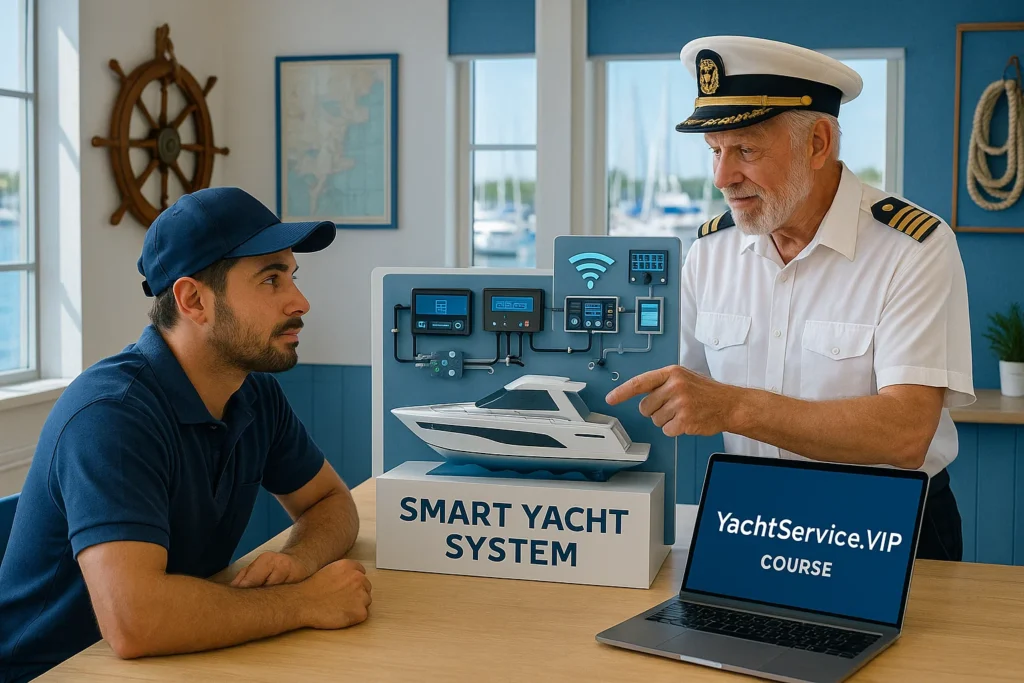
The Technology Landscape
The integration of smart technology in yachting has accelerated dramatically. Systems now common on vessels over 40 feet include:
- Automated Navigation Systems: Garmin, Raymarine, and Furuno offer integrated autopilot, chartplotting, and collision avoidance systems requiring specialized diagnostic knowledge.
- IoT Monitoring Platforms: Services like Siren Marine and Yacht Sentinel provide real-time monitoring of bilge levels, battery status, location tracking, and intrusion detection.
- Energy Management Systems: Victron Energy and similar platforms optimize power distribution between solar, generator, and shore power sources.
- Integrated Entertainment and Communication: Sophisticated AV systems, satellite communication, and smart home integration throughout the vessel.
Building Technical Proficiency
Start with Manufacturer Training: Major marine electronics manufacturers offer online certification courses. Raymarine’s Smart Yacht Systems course ($200, 8 hours) and Garmin’s Marine Electronics Installer Certification (free, self-paced) provide foundational knowledge and recognized credentials.
Gain Hands-On Experience: Volunteer to assist experienced technicians on smart-equipped yachts, or offer discounted diagnostic services to build your portfolio. Document each system type you work with and photograph installations for your professional portfolio.
Stay Current with Updates: Marine technology evolves rapidly. Subscribe to manufacturer bulletins, join online forums like The Hull Truth’s Electronics subforum, and attend regional boat shows where manufacturers demonstrate new systems.
Case Example: A marine electrician in Annapolis invested 40 hours over three months completing manufacturer certifications for Raymarine, Garmin, and Victron systems. Within six months, his specialized smart-system expertise resulted in 35% higher booking rates for electrical work, with clients specifically requesting him for complex diagnostic and integration projects. His average project value increased from $800 to $1,350.
Technology Comparison Table
| System Type | Leading Brands | Skill Development Priority | Certification Cost | Market Demand |
|---|---|---|---|---|
| Navigation & Autopilot | Raymarine, Garmin, Furuno | High | $0-200 | Very High |
| IoT Monitoring | Siren Marine, Yacht Sentinel | Medium | $0-150 | Growing |
| Energy Management | Victron, Mastervolt | High | $150-300 | High |
| Marine HVAC | Dometic, Cruisair | Medium | $200-400 | Moderate |
Core Competency 3: Professional Branding and Client Communication
The Business Case for Personal Branding
In a marketplace with thousands of contractors, strong personal branding creates recognition, builds trust, and facilitates premium pricing. Analysis of top-performing contractors across yacht service platforms reveals common branding elements that correlate with higher booking rates and client retention.
Building Your Professional Identity
Develop a Clear Value Proposition: Craft a concise statement that communicates your specialization and client benefit. Examples:
- “Certified hybrid propulsion specialist—keeping your eco-yacht running efficiently and compliant”
- “25 years teak restoration expertise—preserving your yacht’s classic elegance”
Professional Visual Presentation: Invest in professional photography showing you at work in clean professional attire. Images should convey competence, attention to detail, and maritime professionalism. Include photos of completed projects with visible quality craftsmanship.
Consistent Online Presence: Maintain updated profiles on industry platforms with consistent messaging, recent project photos, and client testimonials. Respond professionally and promptly to inquiries—data shows that contractors responding within 2 hours of initial contact convert 40% more inquiries into bookings.
Client Education and Follow-Up: After completing work, provide clients with maintenance recommendations, documentation of work performed, and reminder schedules for future service. This positions you as a trusted advisor rather than just a service provider.
Case Example: A marine canvas and upholstery specialist in San Diego completely revamped her professional presentation—adding a tagline (“Your yacht’s interior, restored to showroom perfection”), professional before/after project photos, and detailed material specifications. Her repeat business rate increased from 35% to 58% within one year, and she began receiving referrals from yacht brokers who appreciated her professional documentation and communication style.
Core Competency 4: Regulatory Compliance and Safety Certification
The Compliance Landscape
Maritime regulations have tightened significantly, with enhanced focus on:
- Safety Standards: STCW (Standards of Training, Certification and Watchkeeping) requirements for crew, SOLAS safety equipment standards, and U.S. Coast Guard safety inspection compliance
- Environmental Rules: Wastewater discharge regulations, ballast water management, air quality standards in emission control areas
- Regional Requirements: Varying standards across Mediterranean countries, Caribbean territories, and U.S. coastal waters
Achieving and Maintaining Compliance
Know Your Regulatory Environment: Different regions impose different requirements. If you work across multiple jurisdictions, create a compliance matrix documenting requirements for each area. The National Association of Marine Surveyors provides comprehensive regional compliance guides.
Obtain Core Certifications: Essential certifications include:
- STCW Basic Safety Training ($300-500, required for many crew positions)
- ABYC (American Boat and Yacht Council) certifications for specific trade areas ($400-800)
- OSHA maritime safety training for occupational compliance
Document Everything: Maintain detailed records of certifications, insurance, and completed continuing education. Upload certification documents to your service profile and reference specific compliance expertise in your service descriptions.
Case Example: A marine systems technician working in the Croatian charter market obtained both STCW certification and local Croatian maritime authority compliance training. This dual certification made him the preferred contractor for charter management companies needing documented compliance for insurance and regulatory purposes. His bookings from charter operations increased 42%, and he now works year-round with three major charter companies.
Regional Compliance Quick Reference
| Region | Key Regulatory Bodies | Primary Requirements | Typical Certification Cost |
|---|---|---|---|
| United States | USCG, EPA | STCW, ABYC, EPA compliance | $500-1,200 |
| European Union | EMSA, national authorities | STCW, CE marking compliance | €400-1,000 |
| Caribbean | Individual island authorities | STCW, local registration | $300-800 |
| Mediterranean (EU) | EMSA, port authorities | STCW, environmental compliance | €400-1,200 |
Core Competency 5: Industry Networking and Strategic Partnerships
The Value of Professional Networks
Yacht service contractors operate in an ecosystem where reputation, referrals, and collaborative relationships directly impact business success. Data from contractor surveys indicates that professionals with active industry networks report 30-50% more consistent booking patterns and access to higher-value projects.
Building Strategic Relationships
Attend Industry Events: Major yacht shows (Fort Lauderdale International Boat Show, Monaco Yacht Show, Miami International Boat Show) provide concentrated networking opportunities. Even one-day attendance allows face-to-face connections with yacht managers, captains, and fellow contractors.
Join Professional Associations: Organizations like the Professional Association of Diving Instructors (PADI) for dive services, the Association of Marina Industries (AMI), or regional yacht broker associations provide networking events, educational resources, and industry credibility.
Create Referral Networks: Build relationships with contractors in complementary specialties. A mechanic partnering with a marine electrician, canvas specialist, and detailer can offer comprehensive service packages and exchange referrals.
Engage in Online Communities: Participate constructively in yacht service forums, LinkedIn groups, and platform-specific contractor communities. Share expertise, answer questions, and build reputation as a knowledgeable professional.
Case Example: A yacht detailing contractor in Newport Beach began attending monthly Southern California Marine Association meetings and formed referral partnerships with two mechanics and a marine surveyor. Over 18 months, these relationships generated 47 qualified referrals, representing $68,000 in additional revenue. The contractor reciprocated with 31 referrals to partners, strengthening the network’s mutual value.
Measuring Your Professional Development ROI
Strategic skill development requires investment—in training costs, time away from billable work, and ongoing education. Track these metrics to assess your return on investment:
Booking Rate Changes: Compare inquiry-to-booking conversion rates before and after adding new certifications or skills. A healthy improvement ranges from 15-25%.
Average Project Value: Monitor whether enhanced expertise allows you to charge premium rates or attract higher-value projects. Top-tier contractors report 20-40% higher average project values compared to uncertified competitors.
Client Retention Rate: Calculate the percentage of clients who return for additional services or provide referrals. Strong retention rates (above 50%) indicate that your enhanced professionalism and expertise create lasting client relationships.
Geographic Expansion: New certifications may open opportunities in additional regions or with different client types (charter operations, management companies, private yacht owners).
Common Skill Development Mistakes to Avoid
Mistake 1: Pursuing Trendy Rather Than Demanded Skills
Research actual market demand before investing in training. Review job postings, analyze competitor profiles, and survey potential clients about unmet needs. Prioritize skills with demonstrated demand over novel but niche capabilities.
Mistake 2: Failing to Market New Capabilities
Obtaining a certification provides zero business benefit if clients don’t know about it. Update your profile immediately, include certifications in email signatures, mention them in client communications, and photograph certificates for your portfolio.
Mistake 3: Neglecting Soft Skills
Technical expertise without professional communication, reliability, and client service creates friction and limits referrals. Balance technical training with business skills—communication, time management, conflict resolution, and client relationship management.
Mistake 4: Overlooking Geographic Specificity
A certification valuable in Mediterranean charter markets may be irrelevant in Caribbean or Pacific Northwest cruising grounds. Tailor your skill development to the regions where you actually work or intend to expand.
Free and Low-Cost Development Resources
Manufacturer Training Programs
- Raymarine online learning center (free courses)
- Garmin Marine dealer training (free for registered professionals)
- Victron Energy online training portal ($0-150 per course)
Industry Organizations
- American Boat and Yacht Council (ABYC) webinars and standards documents
- National Marine Electronics Association (NMEA) technical resources
- International Maritime Organization publications and guidelines
Online Communities
- The Hull Truth forums (free professional sections)
- Cruisers Forum (technical discussion and professional networking)
- YachtForums professional sections
Government Resources
- U.S. Coast Guard Navigation Center (free regulatory guidance)
- EPA marine environmental compliance guides
- OSHA maritime safety resources
Creating Your Personal Development Plan
Step 1: Assess Your Current Position
Evaluate your existing skills, certifications, market reputation, and booking patterns. Identify gaps between your current capabilities and the requirements for your target client segment.
Step 2: Research Market Demands
Analyze competitor profiles, review job postings for yacht service contractors, and survey past clients about unmet needs or desired services they couldn’t find.
Step 3: Prioritize Skill Investments
Select 2-3 high-impact skills that align with documented market demand, offer reasonable certification costs, and differentiate you from competitors. Create a 6-12 month timeline with specific milestones.
Step 4: Budget Time and Money
Calculate total investment including course fees, travel costs, study time, and opportunity cost of time away from billable work. Ensure you have financial reserves to support the investment period.
Step 5: Implement and Document
Enroll in training, complete certifications, and immediately update your professional profiles. Photograph certificates, document new project types, and proactively inform existing clients about expanded capabilities.
Step 6: Measure and Adjust
Track booking rates, project values, and client feedback for 3-6 months after adding new capabilities. If results don’t meet expectations, analyze whether the issue is skill selection, marketing, or implementation quality.
The Future of Yacht Service Contracting
Industry forecasts for 2025-2030 point to several emerging trends that forward-thinking contractors should monitor:
Electrification and Hybrid Systems: As yacht manufacturers increase adoption of hybrid propulsion and full-electric auxiliary systems, demand for specialized electrical and battery system technicians will grow substantially.
Autonomous and AI-Assisted Systems: Advanced autopilot, AI-powered collision avoidance, and autonomous docking systems will require new diagnostic and calibration expertise.
Remote Monitoring and Predictive Maintenance: IoT-enabled predictive maintenance platforms are shifting work from reactive repairs to proactive system optimization, requiring contractors to develop data analysis and preventive service capabilities.
Experience-Based Services: As yachting increasingly emphasizes experiential luxury, contractors who can contribute to enhanced guest experiences—not just maintain equipment—will command premium positioning.
Taking Action on Your Development
The difference between contractors who thrive and those who struggle often comes down to strategic investment in high-value skills aligned with actual market demands. The specific certifications, technologies, and competencies you choose matter less than your approach: research-driven skill selection, professional implementation, and consistent marketing of new capabilities.
Start with one high-impact skill area—whether environmental compliance, smart systems, or professional branding—and execute thoroughly before expanding to additional competencies. This focused approach yields measurable results while maintaining your existing service quality and client relationships.
Support Resources
For questions about skill development strategies or industry trends, reach out to professional associations in your region or consult with successful contractors in your specialty area who’ve navigated similar growth paths.
Note: Certification costs, course availability, and regulatory requirements change periodically. Verify current information directly with certification providers and regulatory authorities before making training investments.